


Key Takeaways
Expected Lifespan of a Budget Pop-Up Gazebo

Budget gazebos usually have a thin steel frame, light polyester fabric and cheap joints. Used most weekends, they may last one to three seasons before the joints bend and rust or the canopy fades and leaks. Used a few times a year and always stored dry, many last around three to five years. The joints and the canopy tend to give up first.
Expected Lifespan of a Mid-Range Gazebo

A mid-range gazebo typically has a 40mm hexagonal aluminium frame and a coated polyester canopy. Used occasionally, say two to six events a year, and stored dry, the frame can last five years or more. The canopy often needs replacing sooner, at around two to five years, because it faces the sun, damp and dirt that the frame doesn’t.
Expected Lifespan of a Commercial-Grade Gazebo

Commercial-grade gazebos use heavier aluminium, usually 50mm hex or larger, with profile aluminium joints and a 600D coated canopy. Used every weekend and cared for properly, the frame can last around 5 to 10 years, while the canopy typically lasts two to five years, and less in full sun. The joints tend to wear first, then the canopy seams.
Why There Is No Fixed Lifespan for Every Gazebo
Two gazebos of the same size can age very differently. The numbers above move with three things: how often it goes up, how well it’s built and how well it’s looked after.
- Usage frequency : A frame opened once a week takes far more wear than one opened four times a year.
- Build quality: Thin steel and cheap cast joints age fastest. Aluminium with profile joints and a coated 600D canopy lasts longest.
- Care and weather: Sun fades and cracks the canopy, damp causes mould and wind bends frames. A gazebo that’s anchored, dried and stored properly will usually outlast one that isn’t.
Use this table as a rough guide. The ranges are estimates, not guaranteed product lifespans.
| Gazebo grade | How often it’s used | Care level | Rough life (not guaranteed) |
|---|---|---|---|
| Budget (thin steel frame, light fabric) | A few times a year | Dried and stored dry | Often around 3 to 5 years |
| Budget (thin steel frame, light fabric) | Most weekends in summer | Basic care | 1 to 3 seasons |
| Mid-range (40mm hex aluminium, coated canopy) | Occasional (2 to 6 events a year) | Dried and stored dry | Frame 5 years or more, canopy 2 to 5 years |
| Commercial-grade (50mm hex or heavier aluminium, 600D coated canopy) | Regular (weekly markets and stalls) | Anchored every time, dried and inspected | Frame 5 to 10 years, canopy 2 to 5 years, shorter in full sun |
| Any grade | Left up for weeks or months | None of these gazebos are designed for it | No reliable range, and it wears out fastest of all |
These are rough ranges based on typical supplier guidance and warranty terms, so confirm them against your own model.
How Does Usage Affect a Pop-Up Gazebo’s Lifespan?
How often you put it up matters as much as what it’s made of. Every set-up, pack-down and trip in the car puts a little strain on the joints and the fabric.
Occasional Garden Parties and Family Gatherings

Two to six events a year is gentle use. The frame rarely wears out from opening and closing, so the biggest risks are mould from storing the canopy damp and fading from a long afternoon in full sun. Dry it fully, store it indoors and take it down when the party’s over, and a mid-range gazebo can go for many years.
CARE TIP: Before you pack away after a party, open the canopy out and run a hand along the seams and hems. If any spot feels damp, leave it up somewhere sheltered until it’s completely dry, then fold it.
Seasonal Outdoor Events and Festivals

A few busy weekends each summer adds transport, wind and long hours in the sun. Anchor every leg, check the forecast before you go and look over the joints each time you pack down. A quality aluminium frame copes well, but a budget one may bend or rust within a few seasons.
CARE TIP: Pack a small repair kit: spare pins and clips, waterproof tape and a spare set of pegs. A two-minute fix on site is far cheaper than ending the day early, or a bent frame at the next event.
Regular Market Trading and Weekend Stalls

Going up and down every weekend wears the joints, sliders and canopy seams much faster. For this level of use, as a rough guide, 50mm hexagonal aluminium legs with profile aluminium joints are the minimum, with a 600D coated canopy that you replace every two to five years. Budget gazebos are usually not built for it.
CARE TIP: Wipe the sliders and joints with a dry cloth at the end of each trading day, and add a little silicone-based lubricant once a month. Grit is what grinds joints down.
Daily Commercial and Promotional Use

Daily set-up is the toughest test. Look at commercial-grade frames with 55 to 60mm hex legs, reinforced joints and spare parts you can buy separately, and keep a spare canopy if your branding matters. Even then, expect to replace the canopy and some joints before the frame itself.
CARE TIP: Keep a spare canopy and a few spare joints and sliders in the van, and write the date you fitted each canopy on the inside of the roof. That way you know when it reaches the two to five year mark.
One more thing: no pop-up is designed to stay up for weeks or months. Pop-ups are built to go up and come down, not to stand in a garden through autumn gales. Leaving one up is the fastest way to shorten its life, whatever it cost.
Which Parts of a Pop-Up Gazebo Wear Out First?
The frame and the canopy age differently. Wind and rough handling kill frames. Sun, damp and dirt kill canopies. Keep that in mind and most of the advice below falls into place.

Frame Joints, Hinges and Connecting Brackets
The joints take the strain every time you open and close the frame, so they tend to fail first. Look for sturdy aluminium or reinforced nylon, and avoid cheap cast joints, which can crack. The sliders and the scissor truss that opens and folds the frame are moving parts too, so keep them clean and check they lock fully.
DID YOU KNOW? The scissor truss that opens and folds your frame has many pivot points, and each one is a place where grit and wear can build up. Keeping the pivots clean is one of the easiest ways to make a frame last.
Canopy Fabric, Seams and Stitching
The canopy takes the most punishment, so its fabric weight and coating matter. Fabric is sold by a number followed by D, such as 300D or 600D. That’s denier, a measure of thread thickness. Higher means tougher, though the coating matters just as much.
- Thin polyester (around 150D to 300D): Common on budget models. Expect one to three seasons before it fades, thins or leaks at the seams.
- Heavy polyester (500D to 600D) with a PU or PVC coating: The usual choice for regular use. It resists tears, sheds water and holds its colour for longer. Look for UPF 50+ and reinforced corners.
- Heavy PVC-coated fabric: Very hardwearing and waterproof, but heavier to carry.
- Canvas or cotton blends: Attractive and breathable, but they mould quickly if packed away damp.
Whatever the fabric, the coating is what keeps rain out. Once it wears thin, water soaks in and the canopy rots from the inside. Our heavy-duty fabric canopy tents use 600D PU-coated polyester that is waterproof, UV-resistant and flame-retardant.
DID YOU KNOW? The “D” in 600D stands for denier, a unit of yarn thickness. One denier is 1 gram of fibre per 9,000 metres of yarn, so a higher number means a thicker thread.
Roof Supports and Leg Sections

Wind is what bends legs and roof supports. Sight along each leg for bends or kinks, and check the foot plates are straight and uncracked. A leg that has bent under wind load is weaker even after you straighten it, so treat a bent leg as a warning, not a repair.
DID YOU KNOW? A tube gets stiffer very quickly as its diameter grows, which is one reason 50mm hex legs resist bending better than 40mm ones of the same metal and wall thickness.
Fasteners, Connectors and Sidewall Attachments

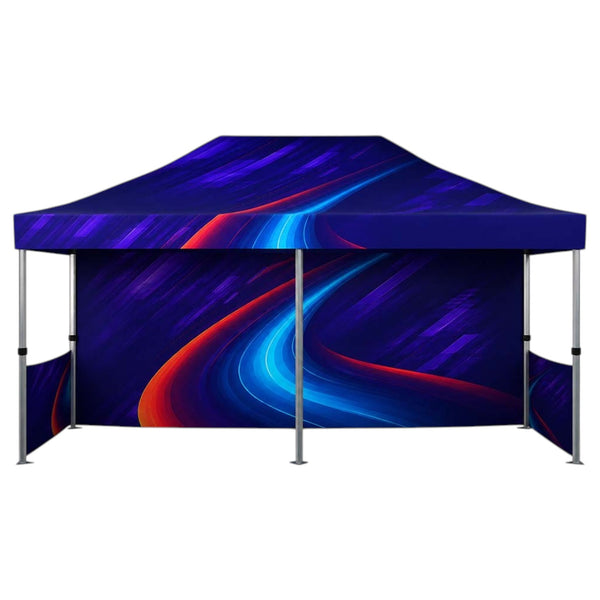
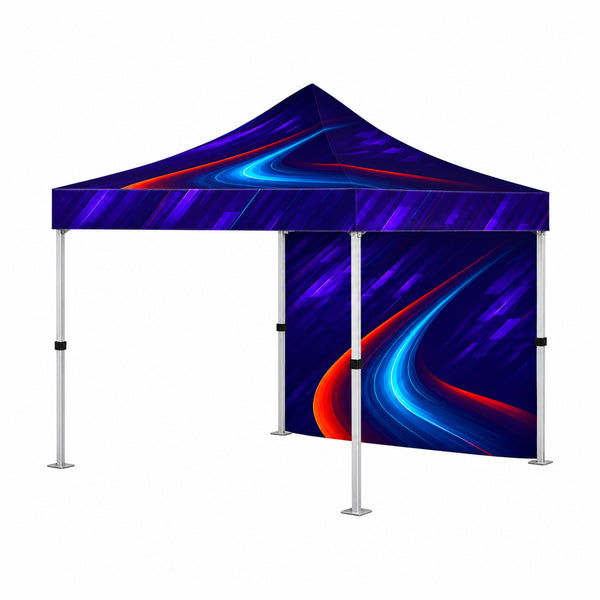
Small parts fail quietly. Pins, clips, bolts, rivets, Velcro straps and grommets wear or go missing, and sidewall attachments take extra load because walls act like a bigger sail. Check them every time you set up. Our canopy tent walls come in half, full, window and door styles, and are best taken off or opened on the windward side when it’s breezy.
DID YOU KNOW? Fitting sidewalls turns an open canopy into a much bigger surface for the wind to push on, so the load on your legs, pegs and attachments rises as soon as the walls go on.
What Factors Affect How Long a Pop-Up Gazebo Lasts?
A gazebo rarely fails all at once. Wear builds up in the frame, the fabric and the way you look after it, and these five things decide how fast that happens.
| Factor | What to look for | What goes wrong |
|---|---|---|
| Frame material and construction quality | Aluminium or powder-coated; 40mm hex for occasional use, 50mm hex for regular use, 55 to 60mm hex for daily use | Thin or poorly coated steel bends and rusts |
| Canopy fabric quality and UV resistance | 500D to 600D polyester with a PU or PVC coating, UPF 50+ and reinforced corners | Thin or uncoated fabric fades, thins and leaks |
| Exposure to rain, wind and sunlight | Anchored legs; take it down in strong wind; shade where you can | Bent frames, torn canopies, fading and mould |
| Frequency of setup, dismantling and transport | Two people setting up; a carry bag; dry fully before storing | Hidden damage, mould, odour and rust |
| Ground conditions and anchoring | Pegs on soil, weights on hard surfaces, level ground | The gazebo lifts, twists or tears at the leg |
How Does UK Weather Affect Pop-Up Gazebo Lifespan?
British weather is rarely extreme, but it’s relentless in a different way: sun, showers and gusts, often in the same afternoon. That mix is hard on both the frame and the fabric.
1. Rain and Moisture: Preventing Mould and Mildew
A coated canopy sheds ordinary rain, so the bigger damage comes afterwards. Pooled water pulls the canopy down and stretches the fabric, and damp fabric packed away turns to mould and mildew, which is hard to reverse. If water collects, push it off from underneath with a broom handle, working from the edge, and lower one side a height notch so the roof sheds water. If you have to pack up wet, which happens at many wet British events, open it out at home the same day.
REAL UK INCIDENT: During Storm Babet in October 2023, the Met Office issued two red rain warnings for eastern Scotland, and its report on the wettest October on record for eastern Scotland records 235.9mm of rain that month, 82% more than average. It’s an extreme case, but it shows how quickly a UK spell can turn wet, and why a sound coating and a dry-before-packing habit matter.
2. Wind: Reducing Stress on the Frame and Canopy
Wind can lift a gazebo even on a calm-looking day. The Met Office issues yellow, amber and red wind warnings based on the likely impact, and its Beaufort scale describes Force 8 as a gale, with winds of 39 to 46 mph (62 to 74 km/h). Take the canopy down before it gets that far.
| Beaufort force | Wind speed | What it means for a pop-up gazebo |
|---|---|---|
| Force 6, strong breeze | 25 to 31 mph (39 to 49 km/h) | Some commercial suppliers advise taking it down from around 30 mph (48 km/h) |
| Force 7, near gale | 32 to 38 mph (51 to 61 km/h) | Take it down |
| Force 8, gale | 39 to 46 mph (62 to 74 km/h) | A pop-up gazebo is not designed for this range |
Note: The Beaufort scale guide describes average wind speed, so gusts can be stronger. The right-hand column is guidance for gazebos, not a Met Office statement.
For larger event structures, HSE’s guidance on temporary demountable structures covers good practice for putting them up and taking them down.
REAL UK INCIDENT: On 19 July 2023 a scaffold tower on Putney High Street overturned after it was covered in sheeting that acted as a sail in windy conditions, trapping two members of the public. The Health and Safety Executive’s press release on the prosecution shows how a large flat surface can turn a stable structure into a hazard, the same principle that applies to a gazebo canopy and its sidewalls.
3. Sunlight: Preventing Fading and Fabric Deterioration
Sun doesn’t have to be fierce to do damage. Long, repeated hours under the canopy fade the colour, dry out the coating and leave the fabric brittle. If you are using the gazebo for a long event, position it so the canopy isn’t taking harsh afternoon sun all day, and take it down when you are finished instead of leaving it up for weeks.
REAL UK INCIDENT: On 19 July 2022 the UK recorded its hottest day on record, 40.3°C at Coningsby in Lincolnshire, according to the Met Office’s July 2022 heat review. A day like that is rare, but it’s a reminder that a canopy left in strong sun and heat for hours takes a lot of punishment, so shade it where you can and take it down when you’re done.
4. Winter Storage: Protecting the Gazebo During Colder Months
Most gazebos wear out slowly in the shed, not at an event. Before putting it away for winter, clean and dry the canopy completely, wipe down the frame and check for rust or white powdery corrosion. Then store it somewhere dry.
- Keep it in its carry bag, somewhere dry, such as a garage, loft or indoor cupboard
- Raise it off bare concrete floors, which hold damp
- Don’t stack heavy items on top of the frame
- Don’t leave it in a hot car or van for long periods, as heat damages coatings
Give it a full check in spring before the first event, so any damage from the shed doesn’t turn into a problem on the day.
REAL UK INCIDENT: Storm Arwen on 26 and 27 November 2021 brought a rare red wind warning to north-east England and eastern Scotland, with a gust of 98mph recorded at Brizlee Wood in Northumberland, according to the Met Office’s UK storm season 2021/22 summary. Winter storms can arrive early and hard, so a gazebo belongs packed away indoors, not left standing.
How to Make Your Pop-Up Gazebo Last Longer
A pop-up gazebo can last many seasons, but only if you treat it as gear that needs a little care. Most of the factors above are in your hands, and each fix below is easy.
Set Up and Dismantle It Correctly

Open the frame slowly and let the joints slide on their own. Forcing a stuck leg or pulling the canopy tight before the frame is fully extended bends the metal and strains the seams. Use two people, one at each end, and set every leg to the same height notch before you raise the roof. Fold it down the same way, never dragging it across the ground.
Secure It with Suitable Weights, Pegs and Guy Ropes

An unanchored gazebo can lift, twist the frame or hurt people and property nearby.
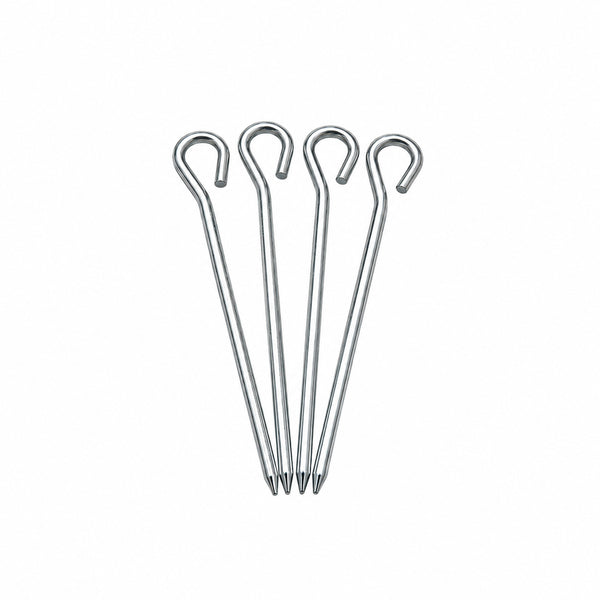
- On grass or soil: Peg through every foot plate, angled away from the gazebo, and add guy ropes if you have them. Our rope and ground spikes come as a set of 4, one per leg.
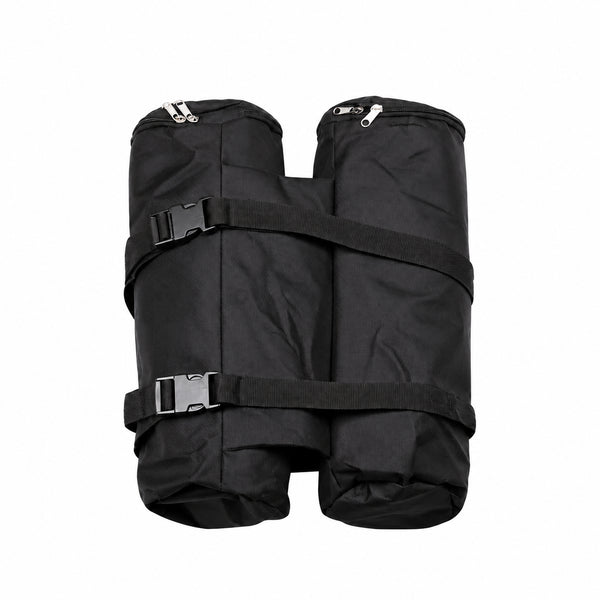
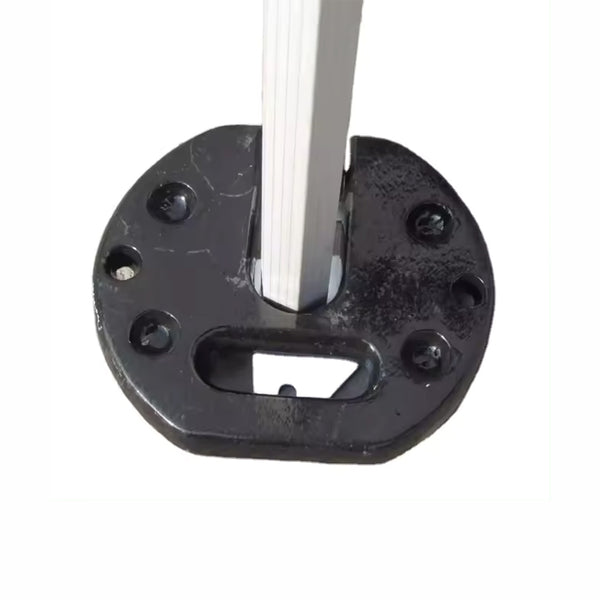
- On paving, concrete or tarmac: You can’t peg, so use weight bags, sandbags or weight plates on every leg. Follow the manufacturer’s guidance on how much weight each leg needs, rather than guessing. We sell sandbags and 10kg weight plates.
- Bad weather: If gusts pick up or a warning is issued, lower it or pack it down. A few minutes of effort is far cheaper than a bent frame or a torn roof.
RECOMMENDED READING: How to Anchor a Gazebo on Grass, Tarmac and Decking
Clean the Canopy Without Damaging Its Coating

Brush off dirt, leaves and bird droppings while the canopy is still up, then wash it with lukewarm water, a soft brush and a mild soap. Avoid bleach, strong detergents and pressure washers, which strip the waterproof coating. Rinse well. For light mould, a gentle fabric-safe cleaner and a soft brush can help. Deep-set mould often leaves permanent staining and weakens the fabric, which is a sign the canopy is nearly finished.
Dry the Fabric Completely Before Storage

This is the single biggest thing you can do for canopy life, because damp is what causes mould. Leave the canopy open until it is completely dry, including seams and hems, somewhere sheltered and airy, as strong sun speeds up fading. Only then fold it away. A canopy packed damp for a week is usually mouldy by the time you open it again.
Store the Frame and Canopy in a Dry Place

Keep both parts in the carry bag, off the floor and away from heat, with nothing heavy on top. Take it down after each event, because leaving it up for weeks wears out the canopy and joints much faster.
Inspect and Replace Damaged Components

Give the gazebo a quick check every time you set it up and pack it down, and a longer check once a month if you use it regularly. It takes a few minutes and catches small faults before they become expensive. Look for:
- Legs: Sight along each leg for bends or kinks, and check the foot plates are straight and uncracked
- Joints and connectors: Cracked, chipped or loose joints, and missing bolts, rivets, pins or clips on the truss
- Sliders and height buttons: Every button should click in fully, and every slider should lock without force
- Rust and oxidation: Rust spots on steel, and white powdery corrosion on aluminium, especially where the coating has chipped
- Canopy: Frayed stitching, split seams, thin patches, and wear at the corners, Velcro straps and grommets
A little silicone-based lubricant on the sliders keeps them moving. Avoid heavy grease, which attracts grit. Replace small worn parts early, before they take other parts with them.
When Should You Repair or Replace Your Pop-Up Gazebo?
Many gazebo problems are cheap to fix, but some are not worth the effort or the risk. The general rule is that cosmetic and small fabric issues can be repaired, while damage to the frame’s structure usually means replacing the part or the whole gazebo. Check your warranty first, because some repairs can void it.
Signs of Frame Damage or Weakened Joints
- Legs that are bent, kinked or cracked
- Joints and connectors that are loose, cracked or no longer lock
- Rust that is flaking or has eaten through the metal
- A frame that wobbles, twists or will not stand square when set up
- Sliders or height buttons that will not hold the legs at an even height
If any of these show up, stop using it. A frame that could fail in wind is a risk to people standing underneath. The scissor-style truss that opens and folds the frame carries the load of the whole structure, so a damaged one is not a repair to gamble on. Never weld, tape or splint a damaged load-bearing part if people will be underneath.
Torn, Faded or Leaking Canopy Fabric
Fabric problems are usually the easiest to fix.
- Small tears and holes: Clean and dry the area, then use a self-adhesive fabric repair patch or waterproof tape. Make the patch about 2 to 3cm larger than the tear on every side, and patch both sides if you can reach them.
- Leaking seams: Seam sealer or waterproof seam tape can stop minor leaks. Reapply it before the next wet season.
- Faded or tired waterproofing: A fabric waterproofing spray can refresh a canopy that is still in good shape. Test it on a hidden corner first.
If you’ve patched the same roof more than twice, or the patches keep peeling, the fabric is past it. If the frame is still straight, solid and opens smoothly, a new canopy can bring an older gazebo back to like new for much less than a full replacement. Signs you need one:
- The fabric feels stiff, chalky or brittle, and tears easily near the seams
- Water soaks into the fabric instead of beading, or you can see light through thin patches
- Seams keep splitting or leaking after being sealed
- Mould or odour will not clean out
A replacement canopy has to match more than the footprint. Check the frame footprint (measured leg to leg, centre to centre, such as 3m × 3m or 3m × 6m), the leg size (40mm or 50mm hex), the roof style and the way it attaches to the frame, and order using your model name where you can. Need a new roof? Browse our heavy-duty fabric canopy tents and choose “Fabric only (no frame)”, and check the return policy in case the fit isn’t right.
RECOMMENDED READING: How to Repair a Gazebo: Canopy Tears, Frame Damage & Replacement
When Replacement Parts Are Worth Buying
Pins, clips, bolts, rivets, feet and individual joints are usually cheap to replace, if the manufacturer sells spares for your model. Take photos and measurements of the broken part before you search, as generic parts often don’t fit. Light rust on a steel frame can be sanded back and touched up with rust-converting paint, and white powdery corrosion on aluminium can be cleaned off and the area sealed. A single broken joint can often be replaced with a spare, but several cracked joints point to an ageing frame, and replacing one at a time won’t solve it. If the whole frame needs replacing, see our aluminium pop-up frames.
When Replacing the Entire Gazebo Makes More Sense
Some gazebos are past saving. When you can’t trust the frame, a new canopy only covers up the real problem. If you’ve patched or replaced parts more than once in a season, or the total repair cost is close to half the price of a new gazebo, replacing it is usually better value. Repairs on an old frame tend to move from one weak point to the next, so a second joint often fails soon after the first. Use this table as a rule of thumb. The “half the price” figure is a guideline, not a standard.
 Repair or replace? A quick guide
Reality check: The cheapest repair is usually the one you do early. A small tear or a loose joint is easy to fix, but left through another storm it can become a bent frame that needs replacing.
When you do replace it, take the old metal frame to your local recycling centre and check what it accepts with your council (you can find your local council on GOV.UK).
Is a Commercial Pop-Up Gazebo Worth the Investment?
For regular use, usually yes. A commercial gazebo costs more up front, but it is built for repeated set-up, so it tends to cost less over the years you use it.
Commercial-Grade vs Budget Gazebos
| What to check | Budget gazebo | Commercial-grade gazebo |
|---|---|---|
| Legs | Thin steel or light aluminium | 50mm hexagonal aluminium as a minimum for regular use, 55 to 60mm for daily use or exposed sites |
| Joints | Often cheap cast joints | Profile aluminium joints and reinforced nylon connectors |
| Canopy | Light polyester (around 150D to 300D) | 600D polyester with a PU or PVC coating, UPF 50+ and reinforced corners |
| Warranty | Often short or limited | A clear frame warranty and a statement of what it covers |
| Spare parts | Often not sold | Joints, sliders, feet and replacement canopies sold separately for your model |
| Wind guidance | Rarely stated | A stated wind limit and anchoring advice in the manual |
Long-Term Value for Regular Event Use
Work out the cost per event, not just the price tag. A budget gazebo used every weekend may need replacing within a season or two, while a commercial frame can stay in service for years, with a fresh canopy every two to five years. If the frame is sound, a new canopy costs far less than starting again, until the combined repair and canopy cost reaches about half the price of a new unit. Spare parts matter too: a gazebo you can repair is one you can keep. To see what this looks like in practice, browse our printed gazebos and gazebo accessories, or talk to an expert about the right spec. If you are planning a branded or custom gazebo, you can ask for a free 2D mockup before you commit.
Choosing a Gazebo Based on How Often You Use It
- A few times a year: A mid-range aluminium gazebo is usually enough. Store it dry and it should last for years.
- Most weekends in summer: Choose 50mm hex aluminium with profile joints and a 600D coated canopy.
- Weekly or daily trading: Choose commercial-grade, with spares available, and budget for a new canopy every two to five years.
- Event or market rules: Check what your organiser requires, such as pitch size, weights and any flame-retardant paperwork, before you buy.



 0 Years